



Dual Ramen Rush is a portrait-oriented cooking and time-management game built around a distinctive split-cup mechanic. Every ramen cup contains two independent halves, each requiring its own noodle and seasoning combination.
Players interpret customer orders, assemble both sides, add optional toppings and wrappers, and complete the order through one of two workflows: Eat In or Seal & Go.
Our team translated the client’s detailed gameplay vision into a complete mobile product, covering technical implementation, visual production, monetization, localisation, optimisation, and QA.
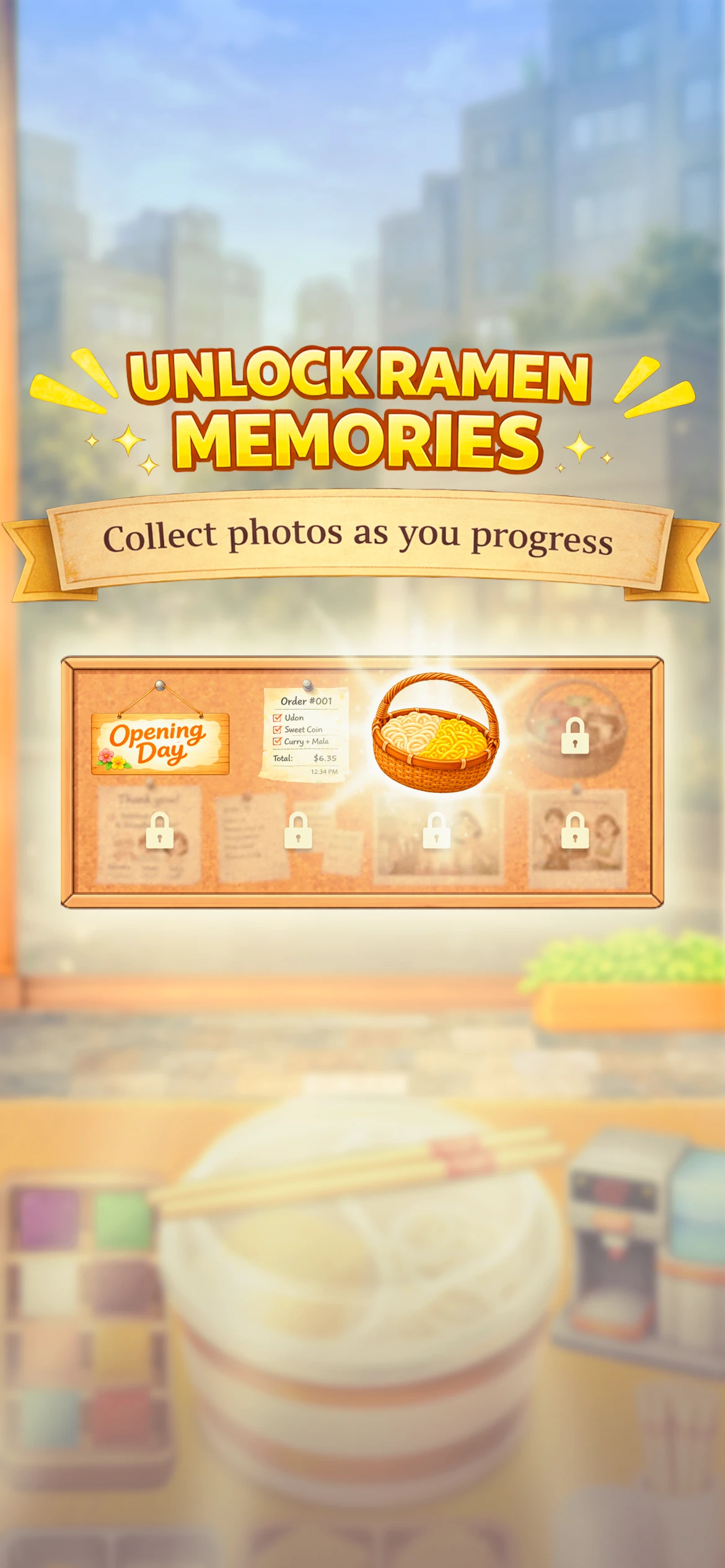


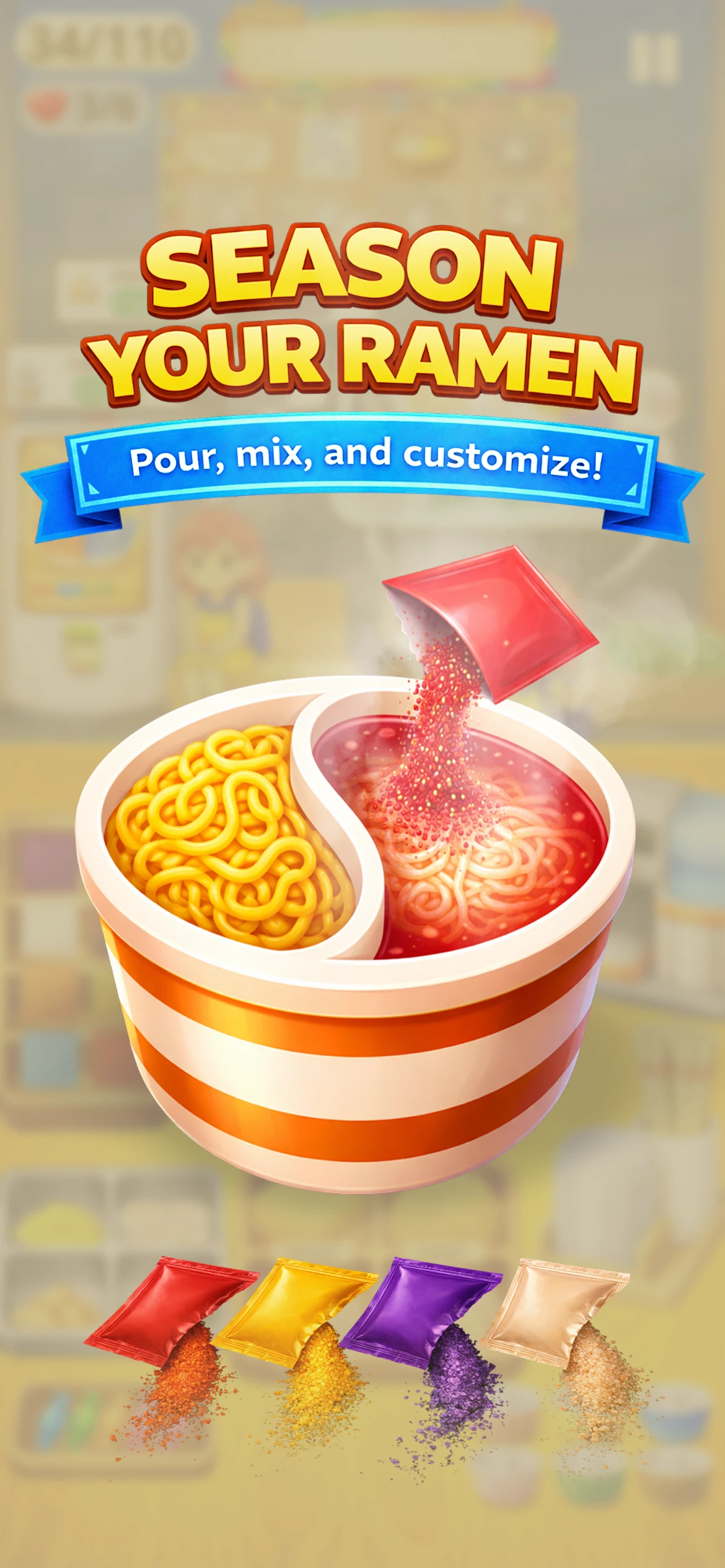
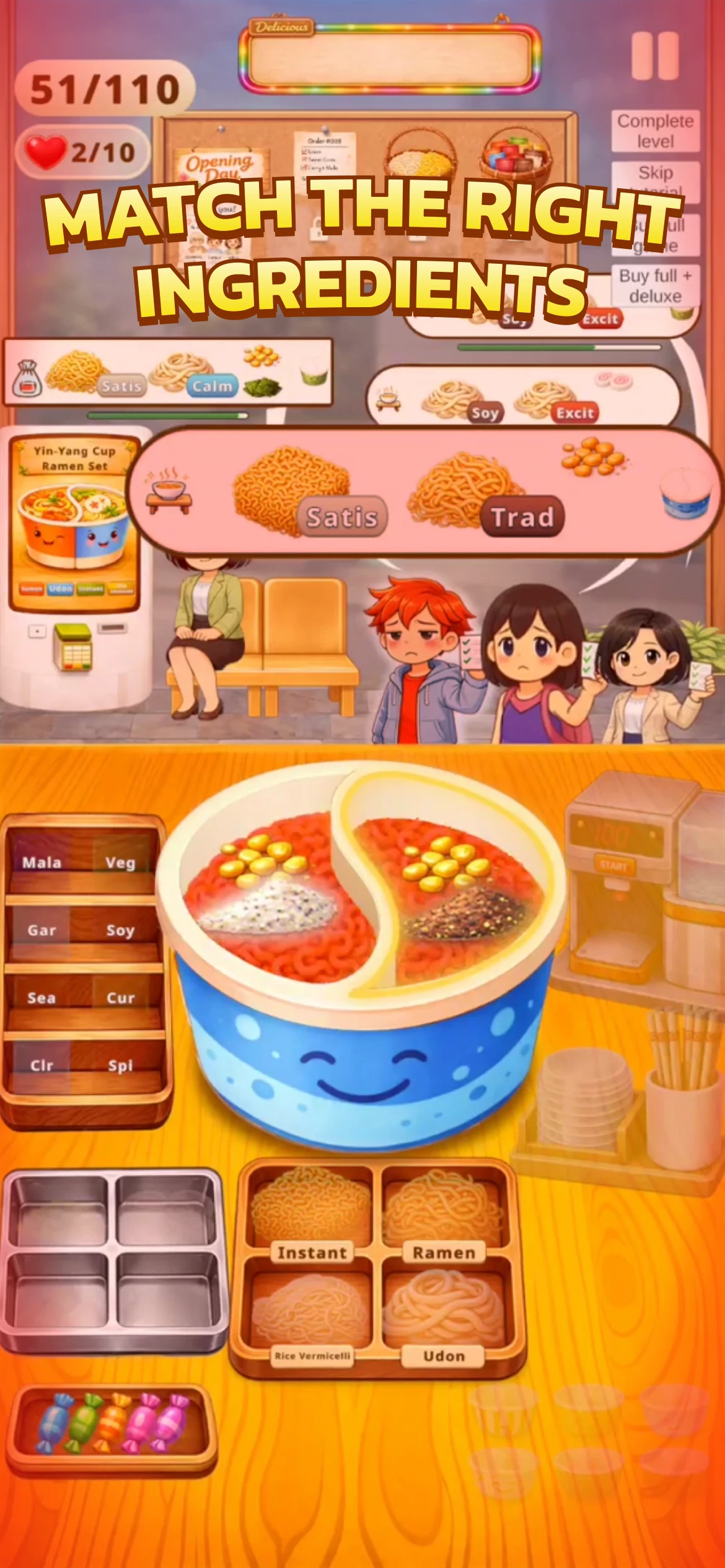

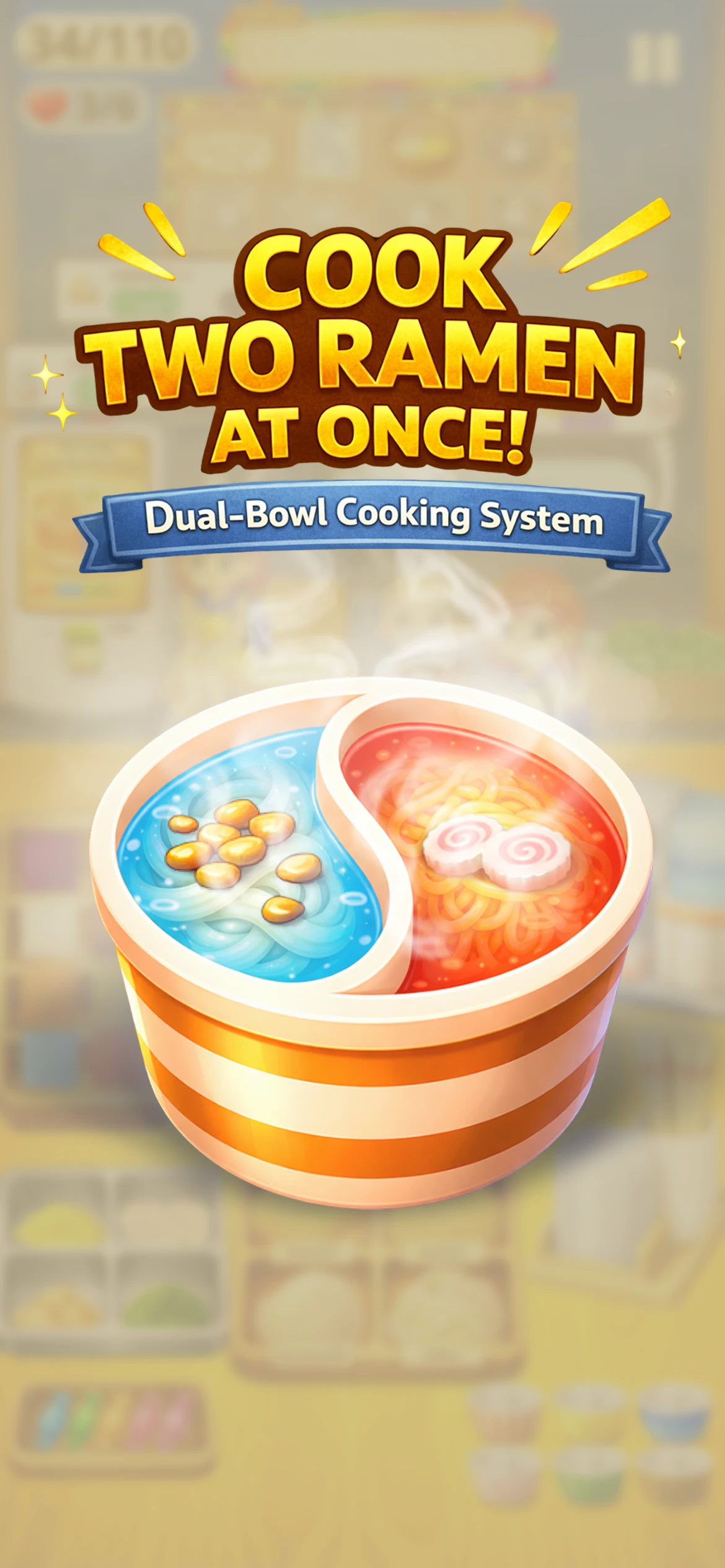

1. Dual-Flavour Cup Assembly
Players prepare two ramen combinations within a single divided cup. The assembly flow includes noodles, seasonings, optional toppings, wrappers, and the selected service type.
The interaction system controls the preparation sequence and provides clear feedback for correct, recoverable, and irreversible actions.
2. Side-Agnostic Order Validation
The two requested noodle and seasoning combinations may be placed on either side of the cup.
We implemented a pair-based validation system that compares complete ingredient combinations rather than fixed left and right positions. Toppings, wrappers, and service types are evaluated separately, keeping the logic predictable and extendable.
3. Multiple Customer Behaviours
The game includes two customer flows:
Queue customers have longer patience windows and rounded order bubbles.
Vending customers follow a separate ordering sequence and lose patience faster.
Reusable customer states manage arrival, ordering, payment, waiting, emotional feedback, service, and departure.
4. Progressive Order Complexity
Difficulty increases through more complex order presentation, additional ingredients, overlapping customers, and shorter reaction windows.
Early levels use clear visual icons, while later stages introduce text-based seasoning names, emotion keywords, toppings, wrappers, and mixed order formats. More than 100 levels gradually introduce these systems through structured tutorials.
5. Eat In & Seal & Go
Every order ends through one of two production paths:
Eat In: The cup moves to the water machine and receives hot water.
Seal & Go: The cup moves to the sealing machine for takeaway service.
Each path includes separate validation rules, visual states, animations, and failure conditions.